Seasonal Blues
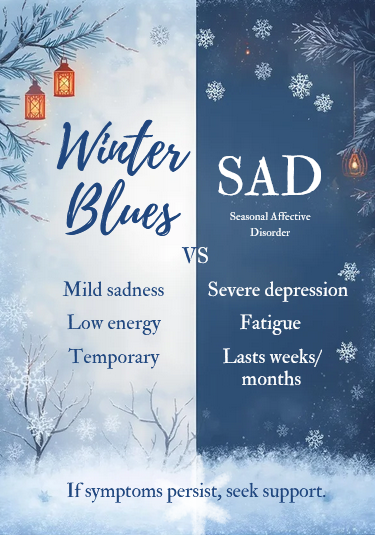
By: Dillon FountainMost people have heard of seasonal depression in some form; however, many think only of what is commonly known as the “winter blues.” The winter blues are a common, short-term mood disturbance that typically lasts a few weeks at most. They often occur as the holidays approach or shortly after the festivities end and usually resolve on their own without treatment.
However, there is a much more severe form of seasonal depression known as Seasonal Affective Disorder (SAD). SAD is a subtype of major depressive disorder that reappears yearly with the shortening of daylight hours. According to the Cleveland Clinic, approximately 5% of adults in the United States experience SAD, while up to 20% may experience the milder “winter blues.”
Because SAD is a form of depression, it is a serious condition and can occur at different times of the year. Although it most commonly presents during the winter months, there is also a less common summer-onset form. Symptoms of SAD mirror those of major depression and include changes in appetite, sleep disturbances, fatigue, low mood, and difficulty concentrating.
SAD is more prevalent in the northern region of the United States and other higher-latitude areas of the world. This is thought to be related to disruptions in our biological circadian rhythms caused by reduced daylight exposure. Decreased sunlight affects mood, sleep regulation, and hormone production, which may lead to chemical imbalances in the brain and trigger depressive symptoms.
In contrast, the “winter blues” are not considered a depressive disorder. They are milder and typically characterized by temporary sadness rather than persistent depression. While some symptoms overlap with SAD—such as low energy or changes in sleep—the winter blues are not an official medical diagnosis. Still, they can take a toll on overall mental well-being.
The winter blues usually resolve on their own within a few weeks. SAD, however, often lasts much longer, several weeks to months, and can be debilitating without treatment. Fortunately, there are effective treatment options available. Light therapy is one commonly recommended intervention and can be started in early fall to reduce the risk of developing SAD. Other treatments include antidepressant medications, vitamin D supplementation, and spending time outdoors, which is an approach I am particularly fond of.
Remember to stay safe and take care of your mental health this holiday season.
Merry Christmas and Happy New Year from the Dakota Initiative.
National Institutes of Health. (2013, January). Beat the winter blues. NIH News in Health. https://newsinhealth.nih.gov/2013/01/beat-winter-blues Cleveland Clinic. (n.d.). Seasonal affective disorder (SAD). https://my.clevelandclinic.org/health/diseases/9293-seasonal-depression